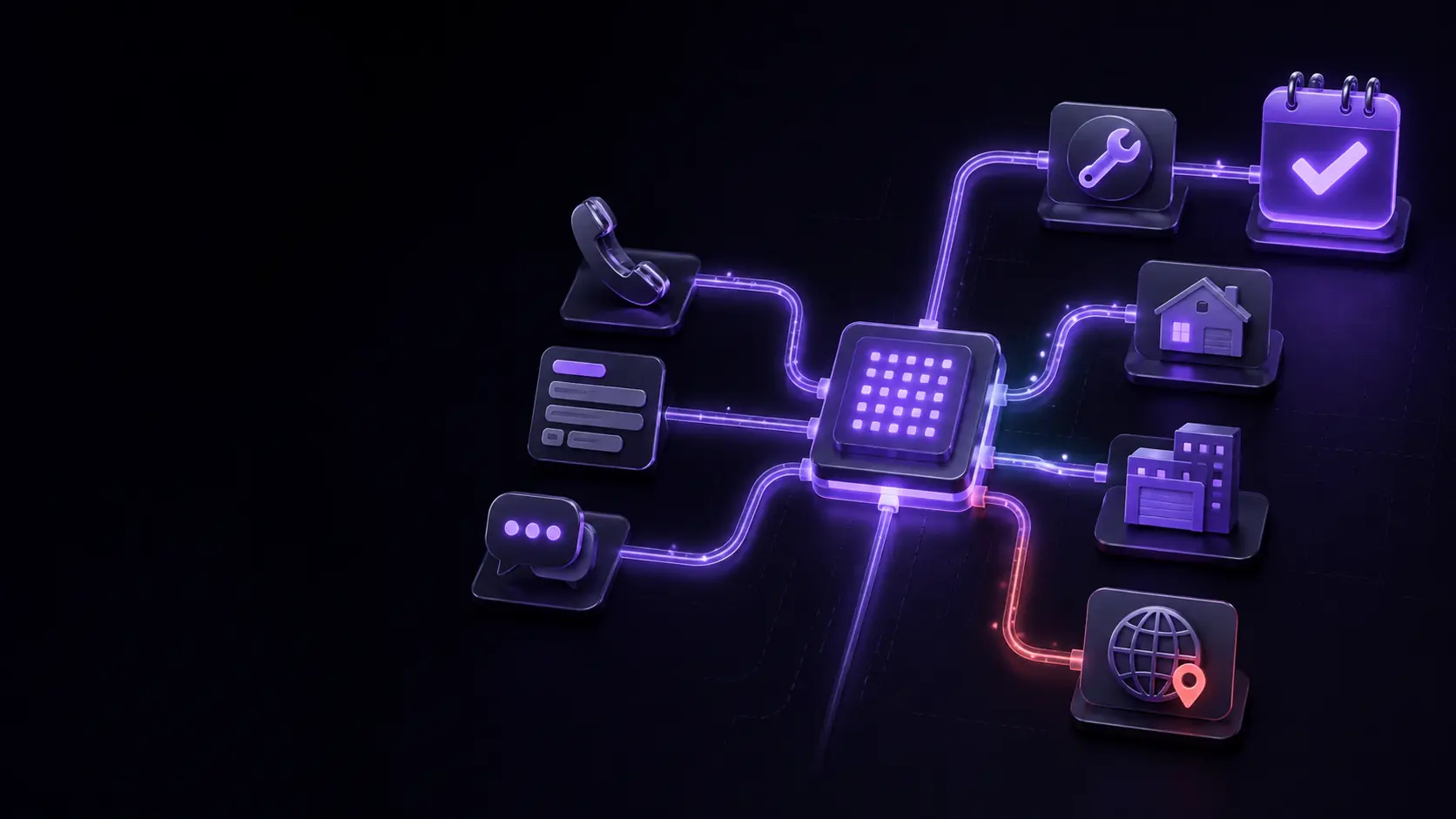
The phone rings while the office is helping another customer. A replacement form arrives after hours. A commercial request lands in a general inbox. The marketing worked, but the lead now depends on an operating system that can acknowledge it, identify the real need, assign an owner, and move it toward a safe, serviceable appointment. The answer is not a generic promise to respond faster. It is a first-response system with clear routing, truthful expectations, and measured outcomes.
01
The answer: give every lead an owner and a next status
A first-response system should answer five questions: who owns the lead now, what must be learned, what can be promised, what is the next action, and how will the outcome be recorded? If any answer depends on whoever happens to notice the message, the business has a queue problem rather than a marketing problem.
EdgeLocal viewpoint: response speed matters only when it is paired with qualification and fulfillment. A rushed answer that promises an impossible arrival time, sends a technician outside profitable coverage, or treats an unsafe door like a routine estimate is not a win. Rankings without qualified calls are incomplete. Leads without clear ownership and booked outcomes are incomplete too.
This guide starts after the conversion. The estimate-form guide covers what the website should collect, the emergency-call guide covers urgent mobile intent, and the call-tracking guide protects attribution. The first-response system turns those inputs into accountable office action.
02
Diagnose where the handoff actually breaks
Review a recent sample of calls and forms from arrival to final disposition. For each lead, record channel, service, market, time received, first human action, qualification, booking, cancellation, completed job, revenue, gross margin, and lost reason. Do not judge the system only by calls answered or messages returned. The missing status between contact and completed work is usually where the useful diagnosis lives.
Look for unowned queues, shared inboxes, voicemail without escalation, forms that do not identify service area, duplicate callbacks, inconsistent hours, and sales notes that never reach dispatch. Compare website promises with office reality. If the site says 24/7 but only captures voicemail overnight, or offers a city the team routinely declines, the marketing and operations are telling different stories.
Separate capacity failures from demand failures. If qualified replacement requests sit untouched, the problem is ownership. If most submissions are outside coverage, repair the service-area strategy. If traffic produces low-intent contacts, use the traffic-to-job diagnostic before increasing media spend.
03
Build different response paths for different jobs
One script cannot serve every inquiry. An answered repair call needs a safe description, location, access context, and honest availability. A replacement lead may need a scheduled consultation. A facility manager may need site access, door type, operational impact, procurement details, and the correct commercial contact. An out-of-area request needs a respectful close rather than a vague promise that wastes both sides' time.
Define an internal service-level target for each queue based on real staffing and hours. The target should identify the owner, backup, approved contact channel, escalation point, and what happens when the target is missed. Publish only the response expectations the company can consistently honor. Faster is useful, but reliable is the customer promise.
Use short status names that office, sales, and dispatch interpret the same way: new, acknowledged, contacted, qualified, booked, nurture, referred, declined, completed, and lost. Require one reason when a lead closes. That reason should be operational, such as outside coverage, unsupported service, no response, timing, price objection, or competitor chosen, not a vague label like 'bad lead.'
04
Make safety part of qualification, not a repair script
The office should collect observable conditions without diagnosing springs, cables, tracks, counterbalance systems, or structural attachments over the phone. If a door is off track, unstable, jammed, visibly damaged, or has a broken spring or cable, advise the caller to keep people away, avoid operating or touching the system, and contact a qualified garage door professional.
DASMA's safety guidance warns that garage door spring systems are dangerous and should be repaired only by trained professionals. The response board should flag a potential hazard for professional assessment, not turn the customer into an inspector. Do not ask for measurements, close-up photos, testing, disconnection, or movement that would place anyone near a damaged or high-tension component.
Urgency also needs honest language. A trapped vehicle, unsecured opening, commercial access failure, and flexible replacement estimate are different operating priorities. Route them separately without inventing scarcity or guaranteeing a dispatch time before availability is checked. The goal is the safest useful next action.
05
Measure qualified bookings instead of activity alone
Track the complete chain: lead received, acknowledged, first human response, contact made, qualified, booked, appointment kept, job completed, revenue, gross margin, and lost reason. Break it down by channel, service, market, day, and response path. Review medians and distributions rather than celebrating one fast callback while older leads remain buried.
Google Ads explains several ways to measure calls from ads and websites, while call-conversion imports can connect tracked calls with later sales or other valuable actions. Google also recommends using established events such as generate_lead where appropriate. Those signals support attribution, but the company still needs its own qualification, booking, completion, and margin records.
Do not send customer names, phone numbers, email addresses, street addresses, free-text notes, recordings, or images into Google Analytics. Google's Analytics policy prohibits sending data it could recognize as personally identifiable information. Keep customer details in approved business systems and send only suitable non-identifying events and classifications when lawfully configured.
06
Run a weekly response-control review
Once a week, review every open lead beyond its internal target, every unassigned queue, repeat lost reasons, bookings that did not become completed jobs, and markets or services the company regularly declines. Choose one operating correction: change ownership, clarify website copy, adjust routing, train a script, narrow coverage, add capacity, or stop buying a source that produces unserviceable demand.
Connect the review to the commercial service path, replacement buyer journey, and repair-price explanation so the website prequalifies the same way the office does. The strongest system is consistent from search result to completed invoice.
Reviewed August 12, 2026. Google sources support the call-conversion, lead-event, attribution, consent, and privacy context. DASMA supports the safety boundary. The First-Response Routing Board, ownership model, queue design, status vocabulary, operating diagnosis, and weekly review are EdgeLocal analysis. Response time, contact, qualification, bookings, completed jobs, rankings, revenue, and margin are not guaranteed.
Sources and methodology
Sources checked for this guide
Source links support the platform, search, or safety facts stated above. The diagnostic framework and commercial recommendations are EdgeLocal analysis.
Value the response leak
Model what better lead handling could be worth.
Use the free ROI calculator with your real lead volume, qualification rate, booking rate, completed jobs, revenue, and margin. A faster callback is useful only when it produces serviceable work.
Open the ROI calculator