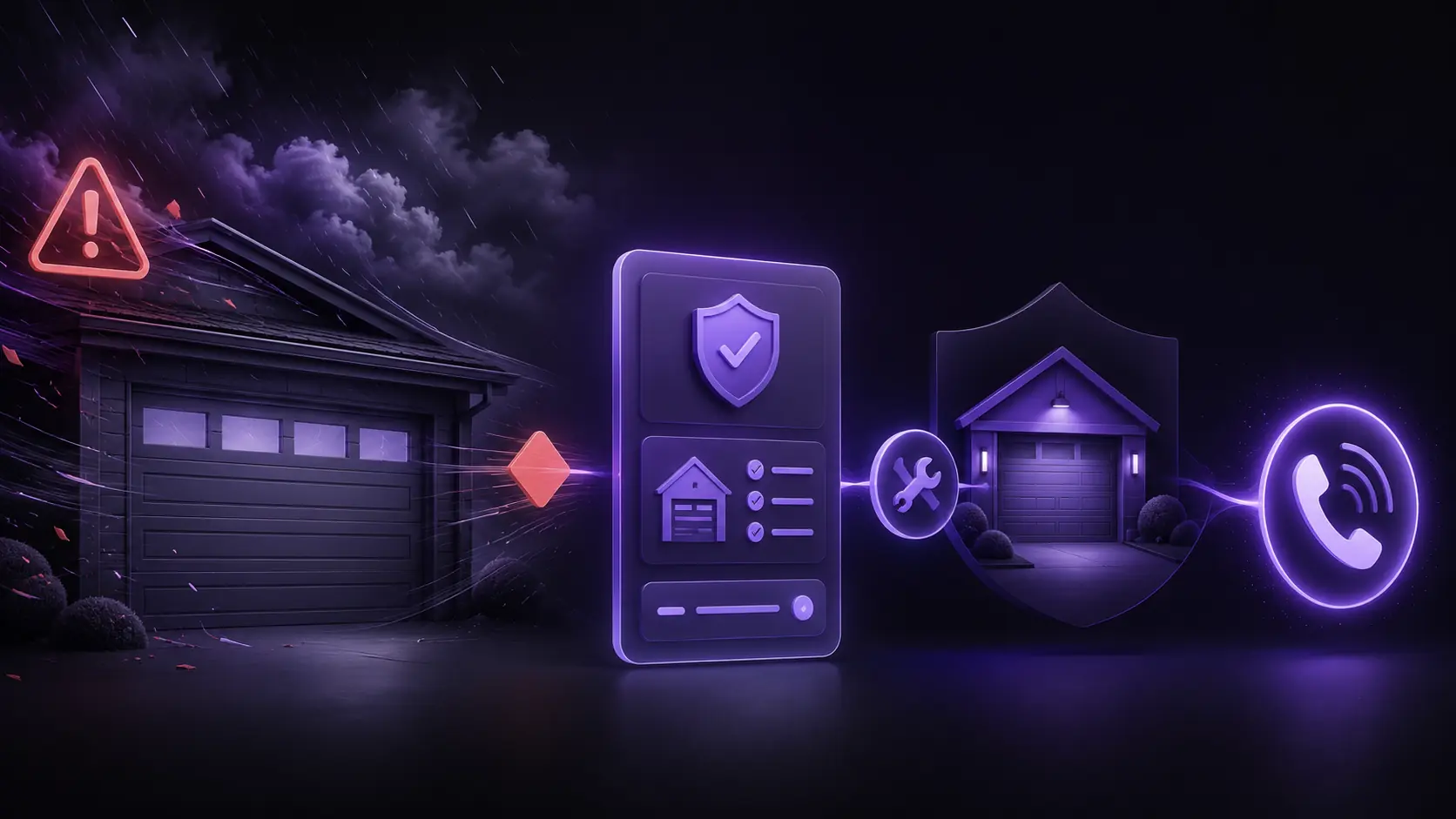
A severe-weather forecast can produce a sudden wave of garage door searches, but the wrong response is a rushed page that promises immediate service everywhere. Build the page and operating plan before demand spikes. Explain what customers can safely observe, where the company genuinely responds, how urgent jobs are prioritized, and what happens after the call. The goal is not storm-keyword volume. It is a truthful path from a stressful search to qualified professional help.
01
The answer: prepare one reliable storm-demand path
NOAA's tropical cyclone climatology says Atlantic hurricane activity historically peaks on September 10, with most activity occurring from mid-August through mid-October. Its August 6, 2026 outlook update still emphasized preparation even while maintaining a below-normal seasonal forecast. A quieter outlook does not make a specific storm harmless, and it does not justify waiting until a local warning to decide what the website should say.
EdgeLocal viewpoint: seasonal visibility is useful only when the operation can support the promise. One strong storm-damage hub, connected to the correct repair, replacement, commercial, and location pages, is usually more credible than dozens of nearly identical hurricane pages. The hub should change customer decisions, not merely repeat a weather term.
The business consequence of being unprepared appears quickly. Calls arrive from outside the route, customers expect service during unsafe conditions, and office staff improvise answers about wind-rated doors, insurance, temporary security, or same-day response. A clear page and call-handling plan can qualify that demand before the dispatcher has to correct the promise.
02
Diagnose the gap before writing the page
Start with operations. List the counties or markets the company can serve after a storm, which residential and commercial systems it evaluates, whether it offers emergency securing, repair, replacement, or only scheduled assessment, and which claims require manufacturer or code documentation. Confirm who updates hours and availability when roads, power, inventory, or technician capacity change.
Then audit the search journey. A homeowner asking whether a visibly damaged door is safe has different intent from a property manager planning wind-rated replacements. Route urgent repair questions to the emergency-call framework, larger buying decisions to the replacement page guide, and facility work to the commercial service strategy. The storm page should coordinate those paths rather than replace them.
Check the website and Business Profile together. Hours, phone coverage, service areas, and services should tell the same current story. If the company cannot travel during the event, say when assessments resume. If it does not provide board-up, structural repair, roofing, or insurance adjusting, do not imply that it does. Accurate limits can improve lead quality because customers know what the company will actually do.
03
Publish safe guidance without teaching dangerous work
FEMA notes that garage doors and double-entry doors can fail under wind pressure. DASMA explains that high-wind events include hurricanes, tornadoes, straight-line thunderstorm winds, and cold fronts, and recommends trained door-system technicians for system-specific assessment. That supports a clear safety boundary: describe observable conditions and professional next steps, not repair instructions.
Tell customers to avoid operating a door that is crooked, off track, partially detached, jammed, or affected by broken components. Do not instruct them to adjust springs, cables, tracks, brackets, operators, reinforcement, locks, or counterbalance systems. During active severe weather, personal safety and official emergency instructions come before a service appointment.
Avoid myths that create risk. DASMA warns against leaving a garage door open to equalize pressure during a hurricane. It also notes that door and operator configurations respond differently to wind loads. A marketing page should not convert general guidance into a universal retrofit promise. Product selection, reinforcement, installation, and code compliance require the correct system, documentation, authority requirements, and qualified professional judgment.
04
Build the page around four customer decisions
First, help the visitor identify the service category without diagnosing the system from a photo. Separate visible storm damage, a door that will not close, impact damage, water exposure, power or operator problems, planned wind-rated replacement, and commercial access issues. Explain which situations receive urgent triage and which begin with a scheduled assessment.
Second, prove local operating reality. Show the normal response area, weather-dependent limits, real phone hours, technician qualifications, relevant product or installation capabilities, and approved completed-job evidence. Use the job-photo proof system for permission-based examples. Never borrow storm photos, invent response times, or present a manufacturer rating as proof that every installed system meets it.
Third, set expectations for the call. Ask for the service address, whether people or vehicles are trapped, whether the opening can be secured, what the customer can observe from a safe position, and whether power or access is affected. Fourth, provide the appropriate next step: call, request an assessment, or plan a replacement consultation. Keep the form short enough for a stressed mobile visitor.
05
Avoid the city-page and news-chasing traps
Do not generate a page for every storm name, suburb, county, and service combination. Google's spam policies define scaled content abuse as creating many unoriginal pages primarily to manipulate rankings rather than help users. A useful storm page can mention legitimate coverage and link to established market pages, while the location-page framework determines which places deserve standalone content.
Use temporary updates for facts that truly change. A website notice or Business Profile update can explain adjusted hours, response constraints, or when normal booking resumes. Remove or revise it when the situation changes. Keep evergreen safety, service, and assessment content on the main page instead of leaving outdated emergency claims indexed for years.
Seasonal articles should not become speculative storm reporting. Link customers to NOAA, local emergency management, and other official sources for forecasts and safety directions. The garage door company should communicate only its own verified operating status, professional scope, and customer process.
06
Measure qualified recovery demand, not weather traffic
Tag storm-page calls and forms, then classify service area, customer type, service requested, urgency, booking outcome, completed work, and gross revenue. Use the call-tracking governance guide to preserve the permanent business number. Compare distant or unserviceable inquiries with profitable booked jobs before expanding coverage or content.
Review the page before peak season, after any major event, and when the operation changes. Update availability language, services, routing, completed-job proof, and internal links. If the page gains traffic but produces poor-fit calls, tighten the intent and coverage. If it produces valuable work, improve the weakest point between inquiry, dispatch, assessment, estimate, and follow-up.
Reviewed August 8, 2026. NOAA supports the seasonal timing and current outlook context. FEMA and DASMA support the wind-risk and safety facts. Google supports the scaled-content boundary. The readiness board, page architecture, intake fields, internal routing, operating checklist, and measurement model are EdgeLocal analysis. Forecasts, rankings, response times, calls, jobs, and revenue are not guaranteed.
Sources and methodology
Sources checked for this guide
Source links support the platform, search, or safety facts stated above. The diagnostic framework and commercial recommendations are EdgeLocal analysis.
Map the market you can actually serve
Turn storm coverage into a defensible local page plan.
Use the free Service-Area Page Planner to prioritize real markets, buyer intent, operational proof, and internal links without creating thin storm pages for every city.
Plan the service area